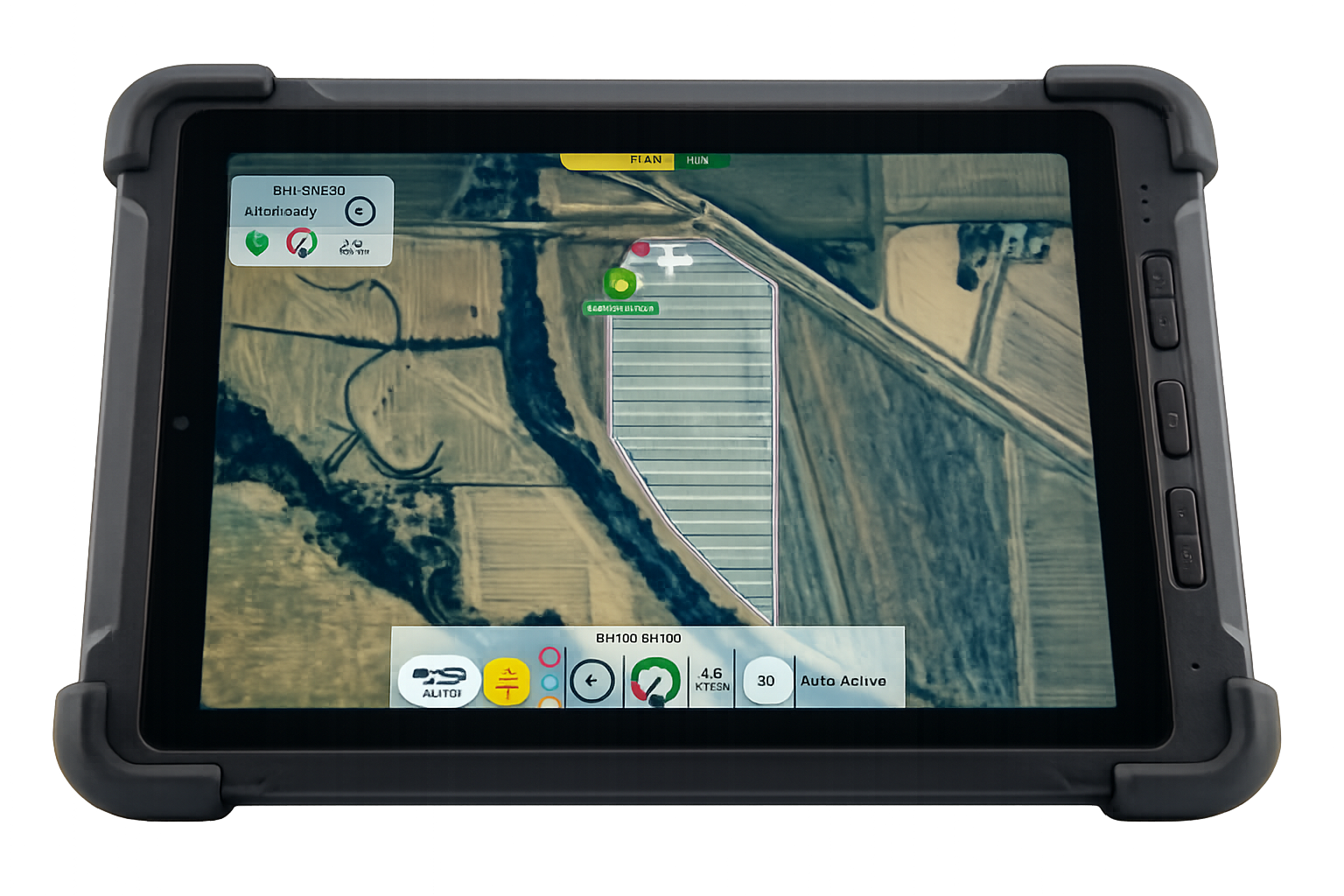
Auto ActiveBH100 SN100
Ops CloudOEM · Dealer · Client
Path PlannerMulti-machine
Most autonomy programs reach a point where the hardware works but the operational software doesn’t exist. Planning tools are separate from monitoring tools. Setup is disconnected from the field. OEM teams, dealers, and operators have no shared data layer.
The gap between hardware readiness and operational readiness kills autonomy programs. A machine that navigates autonomously is worthless if operators can’t configure it, plan jobs for it, monitor it, or support it through a dealer network. Ops closes that gap.
Machine configuration, equipment pairing, GIS import, and persistent settings live in different places — or nowhere. Every deployment requires rebuilding from scratch.
Path planning is separate from the operator interface. Jobs can’t be planned, saved, and pushed to machines without a unified workflow layer connecting them.
When multiple machines are operating, there’s no single view of job status, machine health, obstacle stops, or coverage progress across the fleet.
OEM teams, dealer networks, and end customers have no shared software structure. Support, updates, and data access are handled manually — or not at all.
Mach Ops connects the full operating workflow — configure, plan, monitor, control, and support autonomous machines — through a unified software layer spanning the operator interface, cloud backend, and path planning engine.
// OEM-configurable: Mission Control, Ops Cloud, and Path Planner all adapt to your machine type, application, and customer channel.
Configure machines, map fields and sites, create jobs with multi-function path planning, and monitor live autonomous operations — all from a single native app on Android, iOS, or Windows. Customizable to OEM application and machine type.
Multi-function path planning engine supporting permanent crops, open field coverage, multi-machine coordinated plans, vehicle-to-vehicle synchronous plans, point-to-point routes, trail following, and automatic mode switching. Available via app or web API.
Role-based cloud portals give OEM teams, dealer networks, and end customers the right data and controls for their role in the supply chain. Device provisioning flows from Mach facility to OEM factory to dealer to client — every step managed through Ops Cloud.
Over-the-air software updates keep deployed fleets current without service calls. SignalR real-time telemetry, live KPI dashboards, screen mirror, and machine analysis tools give OEM and dealer teams fleet intelligence without being in the field.
Three layers of software. One unified architecture. Deployed on 260+ autonomous vehicles across 10+ countries. Backed by the same engineering team behind every Mach product.
Software Layers
Mission Control, Ops Cloud, and Path Planner — one unified operational stack covering the full autonomous workflow from setup to post-mission analytics.
Path Plan Types
Permanent crop rows, open field coverage, multi-machine coordination, vehicle-to-vehicle synchronous, point-to-point, trail following, headland styles, and more
Software Updates
Release version management and over-the-air updates push firmware and configuration to every deployed machine without a service visit.
Vehicles Running Ops
Mach Ops is running in production on over 260 autonomous vehicles across 10+ countries. Not a pilot program — a production-deployed operational stack
Mission Control is the primary user interface for autonomous operations. Runs natively on all three platforms. Client-farm-field or client-site-job data structuring, machine setup with persistent configurations and equipment pairing, field and site mapping with GIS import, job creation with multi-function path planning, operational monitoring and control of multiple machines, and remote monitoring.
Ops Cloud is the backend vehicle, services, and user management solution. Web portal with role-dependent features. Subscription management with payment gateway integration for capability tiers (RTK, row-following, telematics). OTA software update and release version management. Dashboard visualization, live KPI tracking, fleet analysis, and data export. API integration for OEM enterprise software and third-party systems.
Multi-machine coordinated plans. Permanent crop path plans. Open field coverage plans. Open water coverage plans. Point-to-point plans. Trail and breadcrumb following. Vehicle-to-vehicle synchronous plans. Passable and impassable inner boundaries. Accommodation for field roads. Waypoint-specific actions. Variety of turn and headland styles. Accessible through Mission Control or as a web-based API. Automatic mode switching based on operation type.
Device config and twin. Vehicle and implement status. Coverage and as-applied data logging. Client/farm/field/job database. Image logging. Data Sync API for offline tablet use. SignalR for remote real-time monitoring of status. Custom sensor data logging based on machine type. Azure IoT Hub and Azure Data Explorer for fleet-scale analytics. Cloud infrastructure on Microsoft Azure with customer tenant isolation.
Mach Ops is the software layer that connects every product in the Mach autonomy platform. It is not a standalone tool — it is the operational infrastructure the rest of the stack depends on.
Mission Control sends job plans and path routes to Mach Command. Vehicle execution state, speed, and obstacle events flow back to the operator interface in real time.
Nexus carries machine telemetry to the Ops Cloud backend. Live vehicle status, job progress, and sensor data replicate to Azure Data Explorer for fleet analytics.
UUID provisioned at Mach → linked to OEM serial at factory → assigned to dealer → transferred to client. Each step managed through Ops Cloud portal roles.
Standardized APIs support OEM-specific metadata alongside standard fields. Integrates with OEM enterprise software, legacy systems, and third-party path planners.
Path planning accessible as a web-based API enables OEMs to integrate coverage planning directly into their own operator interfaces or backend workflows.
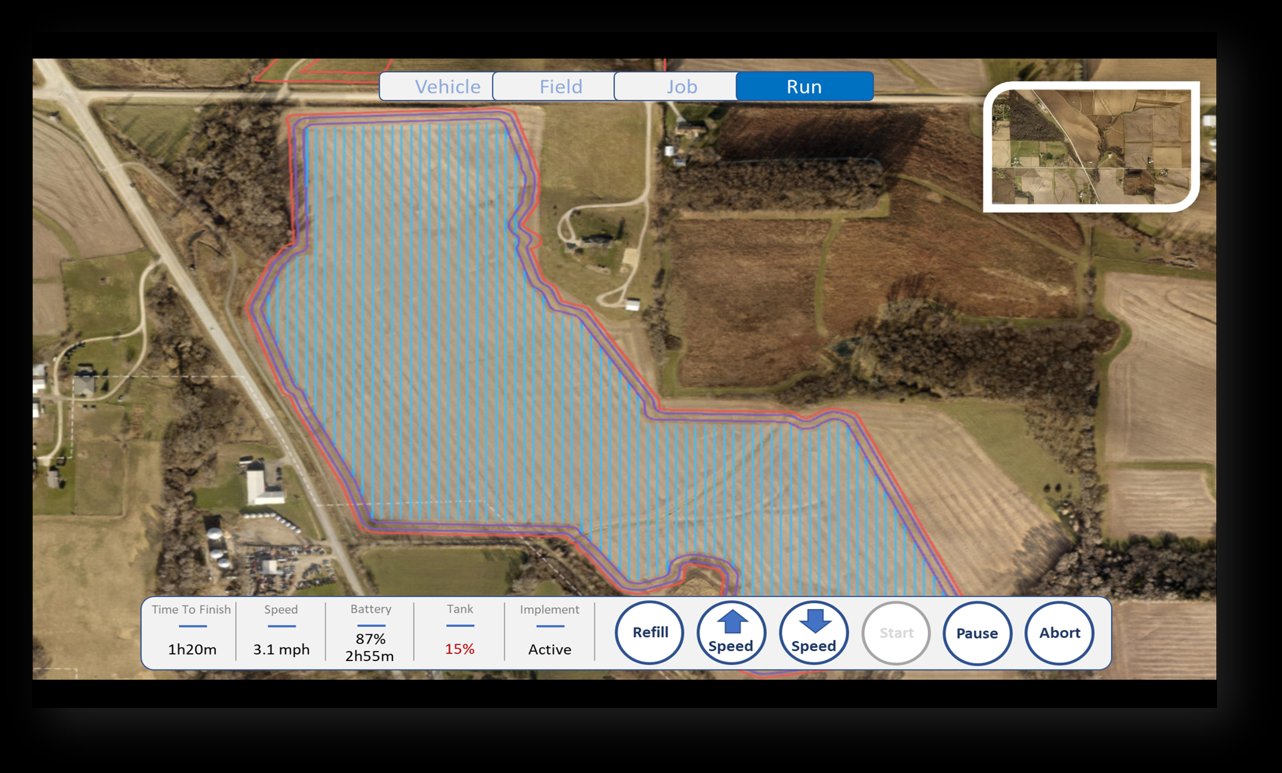
Mach Ops powers autonomous machine operations across every industry where off-highway equipment works. The same software stack, configured for each application.
Mission Control on autonomous sprayers, mowers, and tractors. Field mapping, coverage path planning, and real-time job monitoring across row crops and permanent crop orchards with GIS import.
See Agriculture Integration →Site mapping, geofence setup, and job monitoring for autonomous grading and earthwork platforms. Multi-machine coordination and remote diagnostics for active site management.
See Construction Integration →Haul route job management and fleet monitoring for autonomous equipment on open-pit operations. Remote monitoring capabilities for supervisor teams operating off-site via Ops Cloud.
See Mining Integration →Job routing, operator assignment, and fleet management for autonomous vehicles in industrial facilities. Client portal for site managers, dealer portal for service teams, OEM portal for engineering.
See Industrial Integration →Tell us about your machine, your application, and your OEM program. A Mach engineer will show you how Ops configures for your platform and your customer channel.
Talk to a Mach engineer about Mission Control, Ops Cloud, and Path Planner configured for your machine type and application.
Evaluating operational software for an autonomous fleet program? Let’s scope the Ops integration for your use case and channel structure.
See how Perception, RadX, Command, Nexus, and Pilot work together as a unified autonomy platform with Ops as the software layer.
View Full platform →